
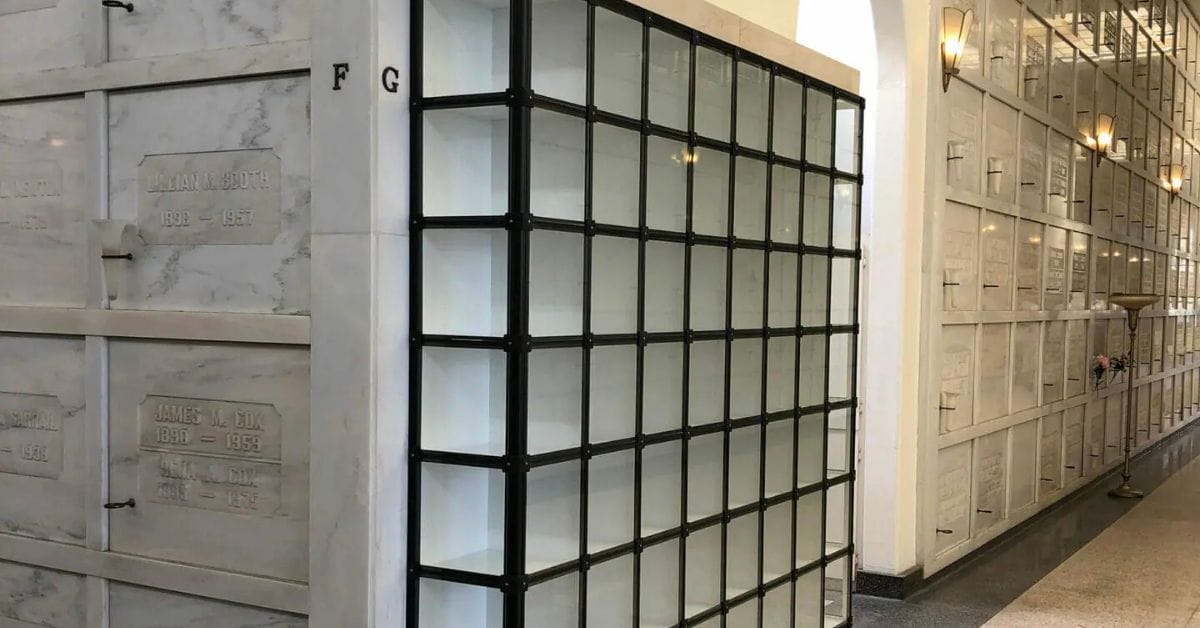
Columbarium design shapes how families visit, remember, and feel connected to a final resting place. For churches and cemeteries, niche style also affects the space’s appearance and the care it may require over time. Glass-front and solid niches both provide a respectful place for urns containing cremated remains, but they create different experiences for visitors.
The right choice depends on the setting, the community, and the type of memorial experience your organization wants to support. Some spaces call for a more personal display, and others benefit from a quiet, unified look that’s easy to maintain. Understanding the difference can help you decide whether glass-front niches or solid niches are best for you.
What Are Glass-Front Niches?
Glass-front niches feature a clear front panel that allows visitors to see the urn inside. Families may also place a small personal item in the niche, depending on the rules set by the church or cemetery. This creates a visible memorial that can feel warm and personal without changing the purpose of the columbarium.
Generally, glass-front niches work well when the organization wants each niche to feel distinct. Additionally, cemetery glass front niches invite visitors to pause and reflect on the person remembered there. It also gives families a way to express identity, faith, or connection in a controlled space that remains part of the larger columbarium design.
A More Personal Memorial Experience
A glass-front niche can help families feel close to the person they visit. Since the urn remains visible, the niche may feel less distant than a closed-front option. The front panel creates a sense of presence while still protecting the urn and preserving the dignity of the final resting place.
This style can matter in a church setting where families return often for Mass, prayer, or parish events. A visible memorial can support those moments of remembrance. It also gives the space a more personal feel, especially when the columbarium sits in a chapel or another quiet area meant for reflection.
Design Impact in the Memorial Space
Glass-front niches change how a columbarium feels because the urn and interior display become part of the design. Instead of creating one fully uniform surface, each niche adds a small point of visual interest. This can make the memorial space feel more personal, but it also means the overall layout needs careful planning so the columbarium still feels peaceful and organized.
The setting matters, too. In an indoor chapel or parish area, glass-front niches can add warmth because families see a visible connection to the person remembered there. In an outdoor cemetery or cremation garden, the design needs to account for glare, natural light, and long-term exposure. When the niche fronts suit the location, the space can feel personal without looking crowded or inconsistent.
Display Rules and Long-Term Care
Glass-front niches need clear guidelines because visible items affect the look of the full columbarium. Families may have different ideas about what feels appropriate. The organization can reduce confusion by setting simple rules before families begin using the space.
Those rules help protect the dignity of the memorial area. They also make ongoing care easier for staff or volunteers. When the expectations feel clear from the start, families can make meaningful choices without creating visual clutter or future maintenance concerns.

What Are Solid Niches?
Solid niches use a closed front panel, typically granite, so visitors do not see the urn inside. The face of the niche usually carries the memorial inscription. This creates a clean appearance that many churches and cemeteries prefer for a larger columbarium wall or a formal outdoor setting.
This type of niche focuses on the name and the permanence of the resting place. The closed front creates a steady visual rhythm in the columbarium. Many organizations choose solid niches when they want the space to feel calm, consistent, and easy to manage through the years.
A Clean and Unified Appearance
Solid niches give the columbarium a steady, unified look because each front panel follows the same design direction. Instead of drawing attention to individual displays, the closed fronts help the entire structure read as one calm memorial space. That visual consistency can matter in a cemetery walkway, a parish courtyard, or another area where the columbarium becomes part of the larger grounds.
A solid-front design also supports a more traditional memorial tone. The focus stays on the inscription and the permanence of the final resting place rather than on visible items inside the niche. For a church or cemetery that wants the space to feel calm and intentional, solid niches can help the columbarium blend into the grounds with dignity.
Privacy for the Urn and Cremated Remains
Some families prefer a niche style that keeps the urn out of view. Solid niches support that preference while still giving families a permanent place to visit. The exterior inscription identifies the person, while the closed panel protects the urn inside.
A solid-front niche can suit communities that take a more traditional approach to memorialization. The closed design can also help churches and cemeteries maintain a quiet tone in the space. Families still have a meaningful place to visit without relying on a visible personal display.
Easier Ongoing Maintenance
Solid niches often create fewer daily care concerns. Since the urn and personal items are no longer visible, staff do not need to monitor display choices as closely. The front panel can also keep the memorial area visually consistent over time.
That practical benefit can matter for smaller churches or cemeteries with limited staff. A columbarium should serve families for many years. When the design reduces avoidable maintenance, the organization can focus more on visitors’ needs and the long-term care of the grounds.

Which Is Best for Your Church or Cemetery?
When deciding whether glass-front niches or solid niches are right for you, begin by considering what fits into your space. Glass-front niches may suit a community that wants a more personal form of remembrance. On the other hand, solid niches may suit a setting that values a quiet, traditional appearance and places less emphasis on display.
Start With the Families Who Will Visit
The best choice starts with the people who will visit the space. Families want a final resting place that feels meaningful and easy to return to. The organization also needs a design that fits the property, supports the mission, and remains manageable over time.
Consider the Setting
Your setting should guide the decision. A church columbarium may need to reflect the sacred character of the parish grounds. A cemetery columbarium may need to connect with existing memorial areas. In both cases, the niche style should support how families gather and remember.
Think Through Policies and Long-Term Care
It also helps to think about policies before choosing the design. Glass-front niches need clear rules for what families may place inside. Solid niches need thoughtful inscription standards to maintain a consistent overall look. These details may seem small, but they shape the experience for many years.
Plan a Columbarium That Fits Your Space
A columbarium should feel respectful from the first visit and remain practical for the organization that cares for it. KMI Columbaria helps churches and cemeteries plan columbarium spaces that reflect their needs and serve families with care. With the right design guidance, your organization can create a lasting place of remembrance that feels thoughtful, welcoming, and manageable over time.
'%3e%3cg id='Final-Copy-2_2_' transform='translate(1275.000000, 200.000000)'%3e%3cpath class='st0' d='M7.4,12.8h6.8l3.1-11.6H7.4C4.2,1.2,1.6,3.8,1.6,7S4.2,12.8,7.4,12.8z'/%3e%3c/g%3e%3c/g%3e%3c/g%3e%3cg id='final---dec.11-2020'%3e%3cg id='_x30_208-our-toggle' transform='translate(-1275.000000, -200.000000)'%3e%3cg id='Final-Copy-2' transform='translate(1275.000000, 200.000000)'%3e%3cpath class='st1' d='M22.6,0H7.4c-3.9,0-7,3.1-7,7s3.1,7,7,7h15.2c3.9,0,7-3.1,7-7S26.4,0,22.6,0z M1.6,7c0-3.2,2.6-5.8,5.8-5.8 h9.9l-3.1,11.6H7.4C4.2,12.8,1.6,10.2,1.6,7z'/%3e%3cpath id='x' class='st2' d='M24.6,4c0.2,0.2,0.2,0.6,0,0.8l0,0L22.5,7l2.2,2.2c0.2,0.2,0.2,0.6,0,0.8c-0.2,0.2-0.6,0.2-0.8,0 l0,0l-2.2-2.2L19.5,10c-0.2,0.2-0.6,0.2-0.8,0c-0.2-0.2-0.2-0.6,0-0.8l0,0L20.8,7l-2.2-2.2c-0.2-0.2-0.2-0.6,0-0.8 c0.2-0.2,0.6-0.2,0.8,0l0,0l2.2,2.2L23.8,4C24,3.8,24.4,3.8,24.6,4z'/%3e%3cpath id='y' class='st3' d='M12.7,4.1c0.2,0.2,0.3,0.6,0.1,0.8l0,0L8.6,9.8C8.5,9.9,8.4,10,8.3,10c-0.2,0.1-0.5,0.1-0.7-0.1l0,0 L5.4,7.7c-0.2-0.2-0.2-0.6,0-0.8c0.2-0.2,0.6-0.2,0.8,0l0,0L8,8.6l3.8-4.5C12,3.9,12.4,3.9,12.7,4.1z'/%3e%3c/g%3e%3c/g%3e%3c/g%3e%3c/g%3e%3c/svg%3e) Your Privacy Choices
Your Privacy Choices